
Techniques for Reviving Old and Worn Out Images: A Complete Guide to Preserving Your Most Treasured Memories
Life is filled with extraordinary milestones—weddings, the anticipation of a new child, cherished moments with family, or the portrait that brings generations together. Yet, over time, the photographs that hold these moments can fade, become fragile, or suffer from damage. Understanding the best techniques for reviving old and worn out images is essential if you wish to safeguard these memories for yourself and for future generations. In this guide, we accompany you through every step: from knowing the importance of restoration to choosing your professional photographer, planning your session, avoiding common pitfalls, and ensuring lasting preservation of your images. You’ll also find practical tips drawn from the expertise of experienced professionals at Video Studio Jimenez.
Why Preserving Photographic Memories Matters
Moments That Cannot Be Repeated
Some moments in life come only once. A wedding unveils promises for a lifetime, a maternity session celebrates the miracle of new life, newborn portraits capture a baby’s earliest days, and extended families gather for rare reunions. Professional photography ensures these occasions are documented faithfully and beautifully, turning fleeting experience into lasting memory.
The Difference Between Casual and Professional Photography
While casual snapshots can be spontaneous and fun, a professional photographer crafts lighting, composition, and emotion to tell the true story of your event or family. This intentional approach makes a difference, especially for milestones you’ll revisit for decades. Professional images are not only higher in quality but are better suited for restoration and long-term preservation.
- Expert eye for detail: Subtle corrections in color and structure.
- State-of-the-art equipment: Ensures image fidelity and higher resolution for restoration.
- Experience with diverse sessions: Wedding, maternity, newborn, and studio portraits require unique approaches.
For further insight into how restoration connects generations, see Ideas to Preserve Your Photos for Future Generations.
Types of Photo Sessions and Their Importance in Preservation
What to Expect from Different Photo Sessions
Understanding the structure and focus of each session will help to prepare and communicate your expectations to your photographer.
- Weddings: Detailed planning for ceremony, portraits, and candid moments.
- Maternity: Gentle poses that honor both comfort and emotion.
- Newborn: Safety-driven, warm, and timely to capture the earliest days.
- Studio: Controlled environment for professional and family portraits.
- Restoration: Focused on reviving and archiving historic images.
- Passport: Strict guidelines, fast turnaround, attention to compliant detail.
Location Options: Studio, Outdoors, Home, Event Venues
Your choice of location impacts both the mood of your session and the preservation of the images.
- Studio: Control over lighting and weather.
- Outdoor: Natural backgrounds but weather-dependent.
- Home: Intimate and convenient, perfect for newborn or maternity.
- Events: Weddings and celebrations often require travel and flexible setups.
| Session Type | Typical Duration | Deliverables | Best For |
|---|---|---|---|
| Wedding | 6–12 hours | Albums, prints, digital gallery | Once-in-a-lifetime events |
| Maternity | 1–2 hours | Wall art, digital selection | Capturing pregnancy glow |
| Newborn | 1.5–3 hours | Fine art prints, announcements | First days of life |
| Studio | 30–90 min | Portraits for various uses | Professional/family images |
| Photo Restoration | Varies | Digital files, reprints | Old, damaged photos |
| Passport | 15–30 min | ID-compliant prints | Official documentation |
Want creative ideas for unique restoration gifts? Check out Creative Gift Ideas for Restored Photos.
Common Mistakes When Selecting a Photographer or Planning a Session
Overlooking the Importance of Experience
Not all photographers specialize in every type of session. Choosing someone based solely on convenience or price can result in missed moments or inferior restoration work. Always review portfolios, client testimonials, and ensure they have hands-on experience with your photography needs.
Poor Communication and Expectation Setting
Misunderstandings about location, style, number of images, or post-processing can lead to disappointment. It’s essential to discuss details with your photographer in advance—especially for restoration: clarify your priorities, desired edits, and expected outcomes.
Neglecting Preparation Before Sessions
Arriving unprepared leads to stress, delays, and missed shots. For restoration, failing to properly store or transport delicate photos can cause further damage—from accidental tears to exposure to sunlight.
- Choose your favorites and store them flat in acid-free sleeves.
- Bring digital backups if possible.
Learn more about common mistakes in restoration at Common Mistakes in Photo Restoration.
Best Practices for Preparation and Comfort
Getting Ready Ahead of Time
- Communicate your vision: Share inspiration images and priorities.
- Plan outfits and bring options that reflect your style.
- For photo restoration, gather all versions and duplicates.
- Allow enough rest—especially for newborns and maternity sessions.
What to Bring and Communicate to the Photographer
Checklist for your session:
- Reference images or poses you enjoy.
- Heirloom items (wedding rings, baby shoes, etc.).
- Special needs or requests regarding time, location, or restoration preferences.
- Questions about image preservation and printing.
Tips for Feeling Comfortable in Front of the Camera
- Meet with your photographer in advance or have a pre-session call.
- Ask about session flow to reduce surprises.
- For children, bring familiar toys to create a relaxed atmosphere.
- Remember, every family and session is unique. Open communication is key.
Discover tips for improving restoration results at Improving Quality Through Restoration.
Delivery Formats, Archiving, and Preserving Your Images
Digital, Print, Albums, and Enlargements
- Digital: Suitable for sharing and archiving. Ask for high-resolution files for flexibility.
- Prints: Best displayed and tangible for gifts and décor.
- Albums: Excellent storytelling through curated selections.
- Enlargements: Feature favorite images in your home or office.
Backups and Long-Term Preservation
- Create multiple digital copies on external drives and cloud storage.
- Use archival-quality paper and ink for prints.
- Keep albums and photos in cool, dry places, away from humidity and direct sunlight.
For digital preservation strategies, read Strategies for Preserving Old Photos in Digital Format.
Options for Restoring Old Photographs
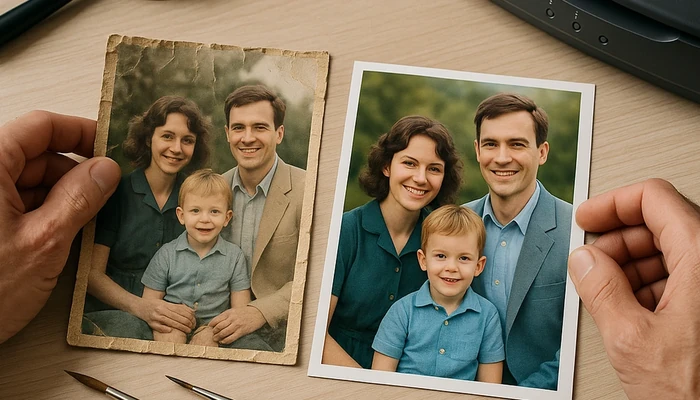
Professional restoration uses a combination of digital tools (like Photoshop), scanning, manual retouching, and attention to keeping the essence of the original image.
- Dust and scratch removal
- Color correction
- Reconstructing missing parts
- Detail enhancement without over-editing
To learn about the precision and artistry behind this work, visit Photo Restoration Art And Precision.
According to CorelDRAW’s guide to photo restoration, careful digital restoration retains detail and authenticity while reviving color and contrast in damaged photographs.
Frequently Asked Questions (FAQ)
How can I prepare my old photos for restoration?
Handle them with clean hands or gloves, store them flat in acid-free sleeves, and avoid exposing them to sunlight. Bring digital scans if possible and consult your photographer before attempting any cleaning.
Can all damaged photos be fully restored?
While many forms of damage—fading, tears, stains—can be improved, the outcome depends on the photo’s condition. Some details may be permanently lost, but skilled professionals can often produce vivid, faithful reproductions.
How long does a typical photo session last?
Session duration depends on the type: weddings may take a full day, while studio or newborn sessions are usually 1–3 hours. Restoration timelines vary based on image condition and complexity.
Should I digitize my prints?
Yes! Digitizing ensures backup and easier sharing. According to TechRadar’s expert guide on restoring old photos, combining digital copies with skilled editing maximizes both preservation and quality restoration.
What is the difference between professional and DIY restoration?
DIY methods may address minor issues but risk permanent damage with improper techniques. Professionals use calibrated equipment and advanced software to ensure detail is preserved and edits are non-destructive.
When should I book a photographer or restoration session?
As early as possible, especially during busy seasons. For restoration, consider time needed for scanning, review, and revision.
What’s included in a professional restoration service?
Most services include high-resolution scanning, color correction, removal of blemishes, repair of creases, and a choice of digital or printed results. Some studios offer consultation on display and archiving as well.
How can I ensure my digital photos won’t get lost?
Follow the 3-2-1 backup rule: keep three copies in two different formats, with one copy offsite or in the cloud.
Are there limits to restoring extremely faded images?
Severely faded photos may require special techniques. While most images can be significantly revived, detail hidden by severe damage can only be partially recovered.
Does restoration change the original print?
No—restoration is performed on digital copies so that your original is preserved unharmed.
Next Steps and How to Begin
Preserving your photographic memories requires thoughtful planning—whether for new sessions or family heirloom restoration. Start by assessing which milestones you want to protect, and reach out early to experienced studios for guidance. Remember, communication, preparation, and understanding your priorities will ensure the best results for all your treasured images.
If you’re ready to breathe new life into beloved photographs or schedule a new photography session, discover our restoration services, or learn more about professional studio photography options. For sessions focused on families, maternity, or newborns, explore our specialty sessions. To easily plan your official photos, get info about passport photos and requirements.
Want to discuss your vision or schedule a session? Contact Video Studio Jimenez today for personal attention and expert advice.
About Video Studio Jimenez
Video Studio Jimenez is a professional photography studio serving couples and families in Chicago, Illinois and nearby areas. With deep expertise in wedding, maternity, newborn, and studio sessions—as well as the restoration of old or damaged photographs and official passport photo services—Video Studio Jimenez is dedicated to preserving the essence and emotion in every image. Each project combines years of technical experience with a sensitive approach to family, memory, and personal milestones.
Photographer in chicago, Chicago Photo Restoration, Photo Restoration Chicago Il, photo repair services Arlington Heights, old photo restoration Bensenville, Restauración fotográfica Elmwood, professional photo restoration North Halsted, old photo restoration Union Ridge, photo repair services Elgin, old photo restoration River Forest