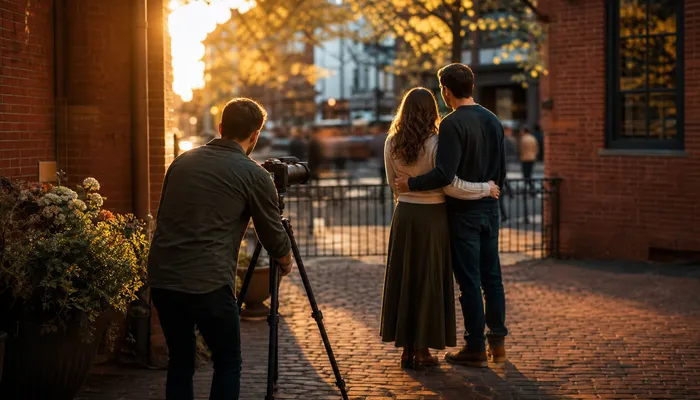
Most wedding days do not fall apart because of one dramatic mistake. They drift because the wedding photography timeline was assembled backwards: the ceremony time was locked first, the reception was booked second, and only later did anyone ask how long family portraits actually take. In Downtown and South Side Chicago, the order in which those decisions get made is what keeps the day calm.
What follows is a planning guide for couples and families across the Chicago area, written from the perspective of a studio that has covered weddings, quinceañeras, maternity, newborn and family sessions for more than 15 years. It is about sequencing, travel buffers, light and the details that are easiest to confirm too late — not about packages or prices.
Illinois Is the Frame, Chicago Is the Calendar
Illinois sits in the Midwest, bordered by Lake Michigan on its northeast edge, with Chicago as its largest city and Springfield as the capital in the center of the state. Illinois is a large, varied market, and a downtown Chicago Saturday does not plan the same way as a quieter weekend far outside the city — but for most celebrations in this region, the practical calendar runs through Chicago and the neighborhoods that ring the center.
Scale is useful context. U.S. Census ACS 5-year estimates place the state population near 12.7 million residents, and just under 14% of residents aged five and older speak Spanish at home. Those figures matter in a practical way rather than a decorative one: many celebrations here involve bilingual coordination, relatives flying in from other states, and several generations who all need to be photographed in organized groups rather than one long line. The underlying estimates are published in Census Reporter’s Illinois profile.
What a Wedding Photography Timeline Actually Is
A wedding photography timeline is not a shot list. A shot list says what to photograph. A timeline says when each block of photos can realistically happen, who needs to be present for it, and how much room sits behind that block if something runs late. Confusing the two is the reason so many couples reach their reception with the portrait session still unfinished.
Most experienced teams build the schedule in three layers:
- Fixed points — ceremony start, reception entrance, venue access windows and any hard departure times.
- Flexible blocks — getting ready, detail photos, a first look, couple portraits and extended family groupings.
- Buffers — ten to twenty minutes between phases that absorb delays instead of cutting into the portraits.
Couples who skip the third layer almost always end up cutting the second.
The Decisions That Lock the Wedding Photography Timeline First
Before anyone writes a minute-by-minute schedule, four decisions determine everything downstream:
- Ceremony time. Every other block moves around it, including when usable light is available for portraits.
- Number of locations. Each additional stop costs travel time, unloading time and setup time — not just the drive itself.
- Who must appear in family portraits. Write the list early; contacting twenty relatives on the morning of the wedding is a schedule problem, not a photography problem.
- Contract coverage and delivery expectations. Confirm hours of coverage, editing scope and how final images will be delivered before the schedule assumes them. If you want a neutral benchmark while comparing studios, professional associations such as the Professional Photographers of America publish guidance on professional practice and client expectations.
Building the Day-Of Order, Block by Block
Getting Ready and Detail Photos
Preparation photos look simple in the final gallery and are the most location-sensitive part of the day. Window light, floor space and general clutter decide how quickly a room can be photographed. Couples getting ready in a downtown hotel suite or a rented loft should plan on at least 45 to 60 minutes for preparation coverage, plus time to move. For couples getting ready downtown, planning an indoor fallback early — the kind of option covered through photo studio sessions in West Loop — keeps a rainy Saturday from rewriting the portrait plan at the last minute.
Ceremony Coverage
The ceremony is usually the least flexible block of the day: guests, officiant and venue are all working to the same clock. Coverage typically begins fifteen to twenty minutes before the announced start so that the walk down the aisle, the reactions and the first minutes after the ceremony are captured without a scramble. If two photographers are covering the day, one can stay with the couple while the other moves ahead to set up the portrait location.
Family Portraits: The Block That Quietly Overruns
Group photos expand in a predictable way — each combination takes longer than the last. A list of ten groupings can take twenty to twenty-five minutes with a cooperative family, and considerably longer with a large, energetic one. The fix is boring and effective: assign one person on each side of the family to gather names, and schedule family portraits immediately after the ceremony while everyone is still in one place.
Couple Portraits
Couple portraits need light more than they need time. Whether you take them before the ceremony, during a cocktail hour or after the reception, the block should be placed where the daylight actually is. Additional creative wedding photo tips can help couples get more variety out of a short block, especially when the schedule only allows 30 to 45 minutes.
Reception Coverage
Reception coverage is where the storytelling happens — entrances, toasts, the first dance, and the moments nobody schedules. A timeline should mark the events that genuinely need coverage and then leave room for everything else, because the strongest images are usually the unstaged ones. That approach is the idea behind wedding photography that captures special moments rather than a rigid shot sheet.
Where the Portraits Happen: Neighborhood Blocks That Save Time
Location choice is a scheduling decision as much as a visual one, because the distance between two “close” spots can quietly consume the entire portrait hour.
Bronzeville, in the Douglas community area on Chicago’s South Side, works well for couples whose ceremony, portraits and reception are split between the neighborhood and downtown — the location keeps travel predictable. Couples who want coverage that starts and ends in the neighborhood typically look at wedding photographers in Bronzeville rather than bringing in a team from outside the area.
Pilsen, in the Lower West Side, works in the opposite direction. The neighborhood is dense and visually layered, and the Pilsen Historic District gives a portrait block a compact, walkable route — an advantage when the window is short. Comparing portrait photographers in Pilsen against studios that would need to travel is one practical way to protect the schedule.
Moving Between Downtown and the South Side
Travel is the most underestimated variable in any schedule. A venue that looks ten minutes away on a map can take considerably longer on a Saturday afternoon, and every stop adds unloading, setup and re-parking time. The working rule is simple: count the drive, then add fifteen minutes per location change.
The South Loop, in the Near South Side, is a common base for couples moving between a downtown hotel, a ceremony and a reception. Its position near the lakefront makes early-evening portrait blocks realistic without a long detour, and coverage planned with event photographers in South Loop usually builds the day around that central location so travel time stays predictable.
How Chicago Light Changes the Wedding Photography Timeline
Sunset is not a detail in Chicago; it is a deadline. Late-June evenings stay bright well past eight o’clock, while December light is gone by mid-afternoon. The same ceremony time therefore produces completely different portrait options in July and in January, and a schedule that ignores the calendar month eventually runs into a dark courtyard.
Three adjustments cover most of it. First, choose the portrait window by season rather than by preference. Second, map an indoor option for every outdoor location. Third, protect the last ten minutes of usable daylight for the portraits that matter most, because that light does not wait.
Hyde Park, a lakefront community area on the South Side, is a good example of why hour matters more than location. Light near the water can be beautiful late in the day and much harder to work with in the middle of it, so the same spot can produce two completely different sets of images depending on when it appears on the schedule.
Family Milestones Around the Wedding Day
Weddings rarely happen in isolation. Many families in this region pair a wedding weekend with an engagement session, a maternity session, a newborn session or a quinceañera celebration, and the relatives who travelled for the wedding are often the reason the timing works at all.
Hyde Park is a frequent setting for those sessions because extended family usually stays nearby. Coordination is easier when the same team handles both kinds of coverage, which is why families compare family photographers in Hyde Park alongside their wedding plans instead of booking two unrelated vendors.
Families deciding whether a newborn session belongs in the same weekend can review the benefits of newborn photography before committing, then slot it where it does not compete with the wedding timeline.
What to Confirm Before the Day Arrives
- A written timeline shared with the venue, the photographer and the officiant.
- A named contact on each side of the family for group photos.
- Confirmed access times and location rules, especially for parks, landmark interiors and venues with their own photography policies.
- An indoor backup for every outdoor block.
- A realistic number of locations — most couples are better served by two than by four.
Frequently Asked Questions
How far in advance should the plan be built?
The structure can be drafted as soon as the ceremony time and venue are confirmed, and refined once coverage hours are set. The minute-by-minute version is usually finalized a few weeks before the wedding, after the venue walkthrough.
Does the schedule change between downtown and the South Side?
Mostly through travel. Central locations such as the South Loop or West Loop shorten drives between venues, while a South Side community area may need a larger buffer if the reception is downtown. The lighting logic stays the same everywhere.
Should couple portraits happen before or after the ceremony?
Both work. Before the ceremony, hair and makeup are fresh and guests are not yet waiting. After the ceremony, the emotion is real but the clock is tighter. The deciding factor is usually the season and where the light falls that month.
What happens if the ceremony starts late?
The buffers absorb it, up to a point. That is why a good schedule is written in priority order: the portraits that matter most get protected positions, and the optional blocks are the ones that move.
Do outdoor photo locations require permission?
It depends on the location. Public ways, park property, landmark interiors and some venues manage photography differently, so confirm rules with each site and with your photographer before the schedule assumes access. “We will figure it out on the day” is not a plan.
Can the same approach work for a quinceañera or a multicultural celebration?
Yes. The blocks change — ceremony, dress details, family portraits, party coverage — but the logic does not: fixed points first, flexible blocks second, buffers last.
If you would rather plan your own day with a person instead of a checklist, the team can review dates, venues and available light with you before anything is booked. Reach the studio at (847) 420-3717 or send the details through the contact page.