
When Your Baby Arrives Early: How Premature Newborn Sessions Should Be Planned Safely
When a baby arrives before the due date, the first plans families made may need to change. A newborn session can still be meaningful, but its timing, location, pace, and style should reflect the baby’s health and the family’s circumstances. When Your Baby Arrives Early: How Premature Newborn Sessions Should Be Planned Safely is not a schedule to follow blindly. It is a framework for making thoughtful decisions with the baby’s care team and a photographer who will respect the family’s priorities.
There is no deadline for documenting a new arrival. Some families take a few simple photographs in a hospital or at home; others wait until their baby is settled and medically ready for a longer session. Both choices can be right. In this guide, you will learn what to ask, what to prepare, which warning signs matter, and how to protect a baby’s comfort without losing sight of the memories you hope to keep.
Because premature babies have individual medical needs, a photographer cannot determine when a session is medically appropriate. The baby’s clinician should guide decisions about handling, travel, infection precautions, and timing. Photography can adapt to that guidance; safety should never be adjusted to fit a preset package or posing trend.
Why an early arrival changes the photography plan
There is no single newborn-session clock
Many families hear that newborn portraits are often made in the first weeks after birth. That convention is not a medical recommendation, and it should not create pressure for a premature baby. A baby born early may spend time in the neonatal intensive care unit, need ongoing care after discharge, or have feeding and sleep patterns that differ from those of a full-term infant.
It can help to separate three dates: the birth date, the expected due date, and the date the baby is medically ready for the kind of photography being considered. Clinicians may discuss corrected age when describing development, but families should ask their care team what that means for their own baby. The photographer does not need to set a date based on age alone.
Choose the memory, not a milestone deadline
For some parents, the meaningful photographs are not posed portraits. They may be a parent’s hand beside a tiny foot, a quiet moment during a permitted visit, or the first family image at home. Other families may prefer to wait for a calm, unhurried session. Either approach can honor the story without comparing one baby’s timeline with another’s.
It may be useful to make a short list of what matters most. For example:
- Photographs that include both parents or siblings.
- A few close details, such as a hand, blanket, or name card, if permitted.
- Images that document the first days at home rather than a particular pose.
- A later portrait session when the family feels ready.
For a broader look at the emotional value and scope of these portraits, see this guide to the benefits of documenting a newborn’s early story. The goal is not to add another obligation to a difficult season. It is to choose photographs that feel supportive to your family.
Start with the baby’s care team and current guidance
Ask the clinician before booking a date
A photographer can explain their process, but only the baby’s healthcare team can advise whether a particular activity is suitable. Before scheduling, ask the clinician what limitations or precautions apply. Be specific about the session you are considering: where it would happen, how long it may last, who would be present, and whether the baby would be handled or repositioned.
Questions may include:
- Is a photography visit appropriate now, or should we wait?
- Are there restrictions on visitors, travel, temperature, or handling?
- Should the session take place only in a particular room or setting?
- Are there infection-control instructions we need to share with the photographer?
- What signs should prompt us to stop and contact the care team?
Follow the care team’s instructions rather than general online advice. Medical plans can change, and a previous approval does not necessarily apply if the baby’s condition changes.
Make consent and privacy part of the plan
If photographs are being considered in a hospital or other care facility, ask staff about its rules before arranging anything. Permission from a parent does not replace facility policies. Some areas restrict photography, visitors, lighting equipment, or images that could identify other patients or staff. Never photograph another patient, a medical record, or a monitor displaying private information without explicit permission.
Decide in advance whether any photographs may be shared publicly. A family can choose private delivery only, even if the images are beautiful. Ask how galleries are stored, who can access them, and whether the photographer will request a separate release before using an image for promotion.
Plan around readiness, not a fixed number of days
Use a flexible booking rather than a countdown
When a baby arrives early, an estimated date can become uncertain. Instead of treating a specific age as the only suitable window, ask whether the photographer offers a flexible hold, a tentative date, or a rescheduling policy that fits possible changes. Get the terms in writing so you know what happens if the baby needs more time or the family cannot attend.
A practical plan may use a check-in date rather than a session date. For example, a family could contact the photographer after discharge and again after speaking with the care team. That keeps communication open without requiring parents to predict recovery. A photographer should not ask the family to make medical decisions to avoid losing a deposit.
Consider short, simple alternatives
A full studio session is only one format. Depending on medical advice and facility rules, alternatives might include a short home session later, a few parent-led photographs in a permitted setting, or a brief visit focused on connection rather than posing. Some families prefer to make their own photographs for now and revisit professional portraits when routines are more settled.
Before deciding, consider these practical details:
- How the baby will get to the location, if travel is appropriate.
- Whether the baby’s feeding or care schedule may require pauses.
- How many people will be present and whether anyone is unwell.
- Whether the room can be kept calm and free of unnecessary equipment.
- What the family would like to happen if the session needs to stop early.
Some photographers use a settling approach for fussy babies. An educational article from Fstoppers describes ways photographers may respond calmly during a session; it is useful as a discussion point, not medical direction. Read Fstoppers’ discussion of managing a fussy baby during a photo session, and ask how the photographer adapts those ideas to your clinician’s instructions.
Choose a photographer by safety practices and communication
Look beyond a beautiful portfolio
A portfolio helps you understand a photographer’s visual style, but it does not show every part of the client experience. For a premature baby’s session, ask how the photographer handles breaks, changing plans, parent-led positioning, sanitation requirements, and a baby who needs to remain in one safe position. Look for answers that are calm, specific, and willing to defer to your care team.
Reviewing practical considerations in newborn photography can help you prepare general questions about session flow and expectations. Every family has different tastes and expectations. Compare portfolios, communication, policies, and the photographer’s approach before making a decision.
Questions worth asking before you commit
- Have you photographed babies with a more complex or changing schedule, and how did you adapt the session?
- Will you follow our clinician’s restrictions without trying to change them?
- Can we pause, reschedule, or end early if the baby needs care?
- How do you clean hands, surfaces, wraps, and props between clients?
- Can the session be limited to parent-held or unposed images?
- What is your policy on sharing images, rescheduling, and refunds?
Experience matters, but a photographer should not imply that experience replaces clinical advice. Be cautious if anyone guarantees that a pose is safe for every premature infant, dismisses your concerns, pressures you to proceed, or suggests that discomfort can simply be fixed in editing.
Make a shared plan before the session
Once the family has guidance from the care team, write down the agreed boundaries and share only the information the photographer needs. For instance, the plan might say: no posed wrapping, no moving the baby from a parent’s arms, a short session with breaks, and immediate cancellation if the family is unsure. Specific limits reduce confusion on the day.
If the baby’s condition changes, update the photographer and follow the clinician’s advice. A responsible session can be postponed or changed. The value of photographs does not depend on completing a particular shot list.
Keep posing, props, and handling conservative
Comfortable connection can be the whole concept
Some newborn photographs use curled poses, wraps, baskets, or elevated props. These are not necessary for meaningful images, and a premature baby may have specific reasons to avoid handling or certain positions. Do not copy a pose from a photograph or ask a photographer to reproduce it without discussing suitability with the care team.
For a cautious plan, focus on naturally supported positions that the baby already tolerates and that the clinician permits. Parent-held photographs, a baby resting in an approved place, or a close crop of a hand may be enough. No image is worth ignoring a baby’s cues.
Understand composite images and behind-the-scenes support
Some complex-looking portraits are created by combining multiple photographs during editing. In a composite image, an adult may support the baby in each frame, and the support is removed later. A final image should never be taken to mean that a baby was safely left unsupported in a prop.
Ask the photographer to explain how a planned image will be made. If the process involves positioning, lifting, wrapping, or a prop, the family should be able to decline it without pressure. Photo editing cannot undo physical risk, discomfort, or a missed opportunity to stop.
Use poses as inspiration, not instructions
An online pose list can help families describe a visual preference, but it cannot establish what is safe for a particular infant. For example, a beginner-oriented article about newborn photography pose ideas may offer visual inspiration; it should not be treated as a medical or handling guide. Your photographer should adapt or omit any idea that conflicts with the baby’s needs.
Choose a style that remains meaningful without a specific pose. Soft light, a parent’s expression, a familiar blanket, and a quiet moment can tell a strong story with very little handling.
Prepare a low-pressure session day
Pack only what the plan calls for
For a baby with ongoing care needs, the family’s regular care instructions and supplies come first. Do not change feeding, medication, clothing, or routine for the sake of photographs. Ask the care team what to bring and follow their advice. The photographer can confirm which simple portrait items are optional.
A short planning list might include:
- Any supplies the family normally needs for the planned outing or visit.
- One meaningful blanket or outfit, if the care team says it is appropriate.
- A written copy of photography boundaries and the stop plan.
- A contact person who can update the photographer if plans change.
- Comfort items for parents and siblings, without adding unnecessary props.
Clothing does not need to be elaborate. If the session is at home later, simple, comfortable pieces usually keep attention on the baby and family. See ideas for choosing simple newborn portrait clothing and adapt them to any medical guidance.
Keep expectations small and adaptable
Rather than planning a long shot list, select two or three priorities. A family portrait, a parent holding the baby, and one detail image may be plenty. Build in time for breaks, and agree that the session may end after a single good moment. A flexible plan makes it easier for parents to focus on their baby instead of a clock.
Tell the photographer about siblings, mobility needs, sensory preferences, or concerns about the setting. If a parent feels overwhelmed, it is okay to ask for a pause or decide not to continue. The family’s wellbeing is part of a successful session.
Give siblings a simple role
Older children may be curious, excited, or unsure. Explain the plan using age-appropriate language and avoid asking them to hold or position the baby unless the care team and photographer agree it is appropriate. They might sit beside a parent, choose a storybook, or make a drawing to include in a later photograph.
Short turns and clear expectations can help siblings feel included without making them responsible for the session. If they are tired or uncomfortable, take a break. Their presence should support a family memory, not become a test of perfect behavior.
Compare session formats without assuming one is best
There is no universal format for a premature baby’s photographs. A setting that suits one family may be unsuitable for another. The table below is a planning aid only; a clinician’s recommendations and facility policies take priority over general photography options.
| Format | Possible benefit | Questions to resolve |
|---|---|---|
| Permitted hospital or care-setting images | Can document an early chapter without waiting for a later milestone. | Are photographs, visitors, lighting, and equipment allowed? What privacy rules apply? |
| Brief home visit after discharge | Offers a familiar setting and can focus on parents and the baby. | Has the care team advised that a visit is appropriate? Can the session stay short and flexible? |
| Studio session at a later date | Provides controlled light and a planned portrait environment. | Is travel suitable? Can the room, schedule, and handling plan meet the baby’s needs? |
| Parent-led photographs | Allows the family to make simple images at its own pace. | What facility rules and medical instructions apply? How will the family protect privacy? |
A studio may be a comfortable option for some families later, while home may feel easier for others. If you are comparing general newborn session formats, you can review information about newborn portrait sessions without treating any location or package as a medical recommendation.
Know when to pause, reschedule, or stop
Let the care plan lead if circumstances change
Families do not need to disclose private medical details to justify a change. If the baby’s clinician advises against the session, the baby is unwell, or the parents feel uncertain, pause and contact the care team as appropriate. Then tell the photographer that plans need to change. A compassionate professional will discuss the next step without asking you to prove that the decision is valid.
Agree on a stop signal and no-pressure policy
Before the session, decide how anyone can request a pause. A parent might say “stop,” raise a hand, or simply ask for a break. The photographer should respond immediately and calmly. If the baby shows signs that concern the family or care team, follow the established care instructions rather than trying to finish a pose.
- Stop when a parent asks, even if the concern seems small.
- Do not continue a pose to complete a shot list or package.
- Follow the clinician’s instructions for any concerning change.
- Reschedule without guilt when the timing is not right.
- Choose simple images or no images if that is best for the family.
These are general planning principles, not a substitute for medical advice or an emergency plan. Keep the baby’s regular care instructions available, and contact the appropriate healthcare professional if you have concerns.
Deliver, protect, and revisit the photographs
Ask what delivery includes
Before booking, confirm the number of edited images, delivery method, expected turnaround, print options, and any fees for additional files. Ask whether the files are high-resolution, whether printing is permitted, and how long the online gallery will remain available. Clear terms matter, especially when family circumstances may require rescheduling.
Some parents may prefer a private gallery with limited sharing. Others may want a small printed collection for close relatives. Decide what feels comfortable rather than assuming digital delivery should automatically mean public posting.
Keep more than one copy
Once the photographs are delivered, save them in at least two places, such as a computer and a separate external drive or secure cloud account. Keep original files unchanged and make an additional copy before editing or organizing. Check periodically that files still open and that passwords or account recovery details are up to date.
Printed photographs can make important memories easy to revisit. Store prints away from direct sunlight, damp areas, and large temperature swings. If you make a book or prints, choose a format that fits the family’s budget and the way you expect to enjoy the images.
Make room for a later chapter
A first session does not have to capture everything. Families may later make photographs at home, during a family milestone, or when the baby is older. A record of the first days and a later portrait can tell different parts of the same story. Neither needs to replace the other.
If there are old family photographs that connect a new baby to earlier generations, careful restoration can also help preserve that history. For information about that separate service, explore the process of restoring family photographs. Restoration may improve fading, tears, or other visible damage, but the results depend on the condition of the original and cannot recreate details that are no longer present.
Frequently asked questions about early-arrival sessions
How soon after an early birth should we schedule newborn photos?
There is no universal number of days. Ask the baby’s healthcare team whether photography, travel, visitors, or handling are appropriate. The family can then choose a flexible date based on the baby’s needs and its own readiness.
Should we use corrected age to choose a session date?
Corrected age may be useful in clinical discussions, but it is not a photography deadline. Ask the care team how they use it for your baby and whether it affects any session-related guidance. A photographer should not use age alone to decide that a session is safe or necessary.
Can we take photographs in the NICU?
That depends on the facility’s policies, the baby’s care plan, and the permission of the appropriate staff. Ask before taking or arranging photographs. Follow privacy rules, avoid capturing other patients or records, and do not use additional lighting or equipment unless permitted.
Are posed newborn photographs appropriate for every premature baby?
No. Babies differ, and some may have restrictions on handling or positioning. A family can choose unposed or parent-held images instead. Discuss any proposed position with the care team, and do not proceed if the baby’s clinician or parent has concerns.
What if our baby becomes unsettled during the session?
Pause and follow the baby’s usual care plan. A session should never require parents to ignore their judgment or try to force a pose. If the concern is medical, contact the care team according to their instructions. The photographer can stop, simplify the plan, or reschedule.
Can we book now and decide the date later?
Some photographers may offer a tentative booking or flexible rescheduling, but policies differ. Ask about deposits, cancellation terms, and how long a date can remain open. Choose arrangements that do not pressure your family to proceed before the care team and parents are comfortable.
What should we tell the photographer?
Share the session boundaries, relevant facility rules, preferred contact method, and the practical information the photographer needs. You do not have to share a full medical history. If a clinician has given specific instructions that affect photography, explain those instructions clearly and ask the photographer to confirm they can follow them.
What if we decide not to have a professional session?
That is a valid choice. Families can make a few simple photographs when permitted, wait for a later milestone, or keep the memory without photographs. Professional images are not a measure of how much a family values its baby or its story.
A calm plan is better than a perfect pose
When a baby arrives early, photography plans should be shaped by medical guidance, the family’s readiness, and the baby’s comfort. Start with the care team, check facility rules, set clear limits, and choose a photographer who welcomes questions and flexible timing. A quiet parent-held image or a later session can be just as meaningful as a carefully styled portrait.
Before moving forward, review the photographer’s portfolio, communication, safety practices, and policies. Every family’s expectations and preferences are different, and no amount of editing can replace thoughtful planning or make an unsuitable session right. If you are ready to explore portrait options after discussing timing with your care team, learn about newborn photography sessions and decide what fits your family.
About Video Studio Jimenez
Video Studio Jimenez brings professional photography experience to weddings, maternity, newborn, studio portraits, photo restoration, and passport photography. Video Studio Jimenez accompanies couples and families in Chicago, Illinois and surrounding areas. Each family’s needs and preferences are different, so it is important to review a photographer’s portfolio, style, communication, and policies before choosing a session. For a premature baby, the family’s healthcare team remains the source for medical guidance, while photography plans should adapt to the care instructions provided.
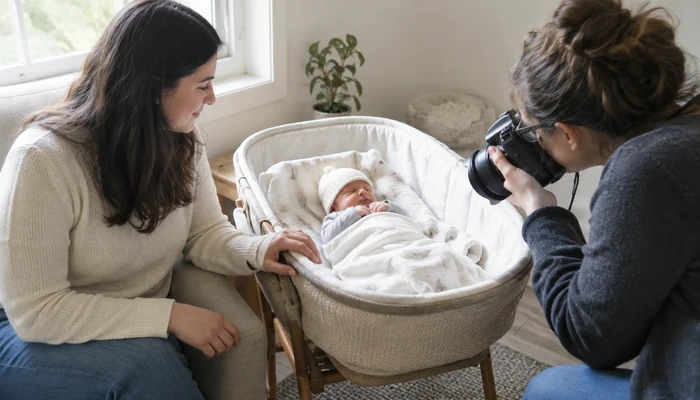
Good photographers in chicago, Photographer Newborn Photographer, newborn photographers, Newborn photographers Elgin, The North Center newborn photographer, Newborn photographer Alton, Park Ridge newborn photography session, Best newborn photographer Sauganash Woods, newborn photography Hinsdale, Best newborn photographers Forest Park